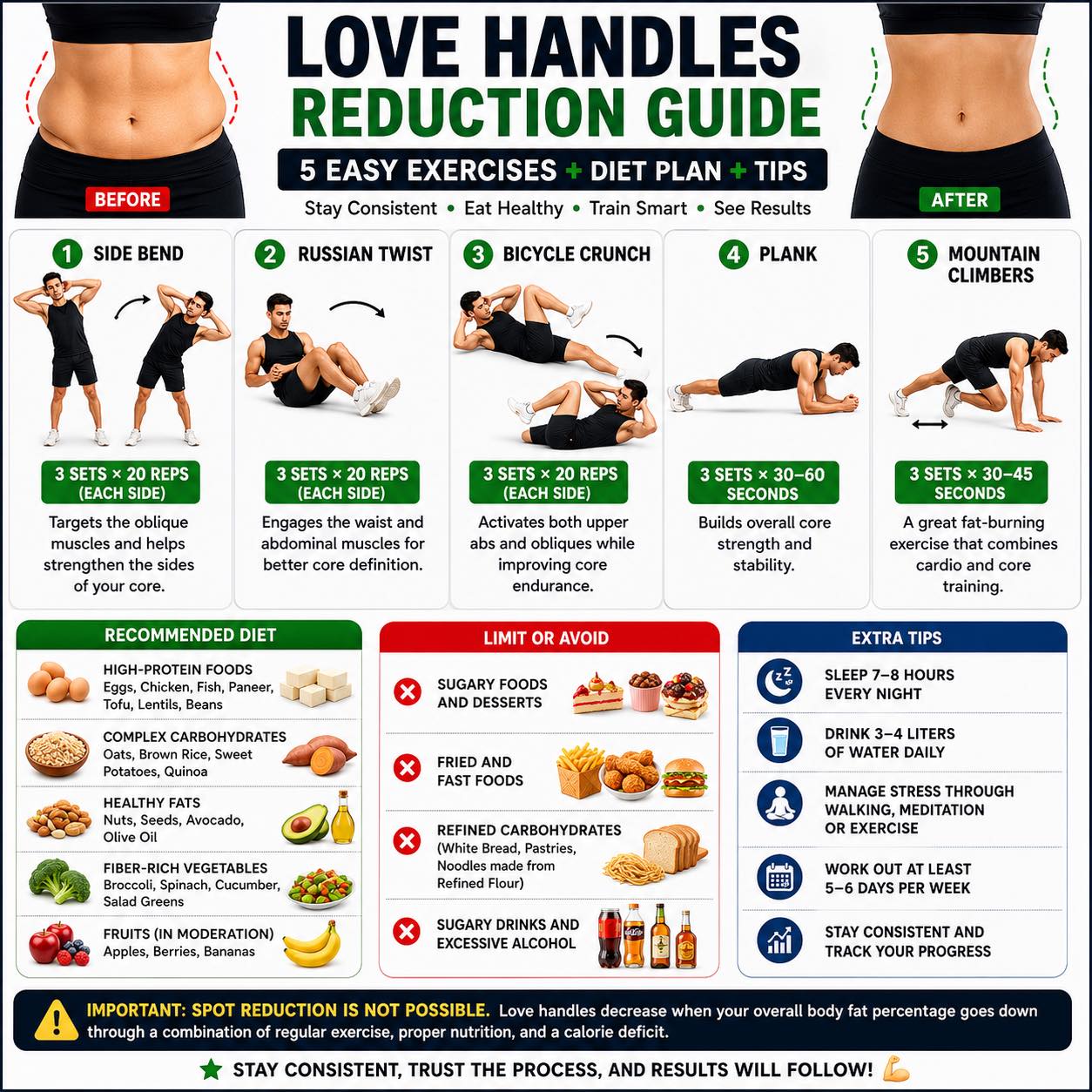
Comprehensive Love Handles Reduction Guide: Workouts, Nutrition, and Metabolic Optimization
Love handles—the stubborn deposits of subcutaneous fat resting directly over your hip bones and lower abdominal flanks—are among the most persistent areas of weight gain to lose. Unlike visceral fat that wraps tightly around your internal organs, love handles sit right underneath the skin, making them noticeably resistant to traditional calorie cuts and quick-fix sit-up routines.
Many individuals make the mistake of thinking that doing hundreds of side bends or crunches will spot-reduce side fat. However, biological science has repeatedly demonstrated that spot reduction is a myth. Body fat burns systemically across your entire structure when you maintain a consistent energy deficit, balanced hormonal environment, and optimized metabolism.
If you're ready to reshape your midsection, lower your overall body fat percentage, and achieve a lean, toned physique, here are 10 proven, evidence-based tips to get rid of love handles for good.
Ready to Accelerate Your Waist-Slimming Journey?
Get instant access to our official love handles fat loss roadmap and meal plans today.
ORDER / DOWNLOAD YOUR SLIMMING GUIDE NOW
1. Eliminate Added Sugars and Refined Carbohydrates
Diets high in refined sugars, high-fructose corn syrup, white flour, and processed bakery items are directly linked to increased visceral and abdominal flank fat. Consuming fast-digesting carbohydrates causes massive spikes in blood glucose, triggering high releases of insulin—the primary fat-storage hormone in the human body.
When insulin remains chronically elevated, your body shifts out of fat-burning mode and begins directing excess calories straight into subcutaneous fat cells around your waist. To reverse this pattern:
- Swap sugary drinks, sodas, and sweetened coffees for green tea, black coffee, or plain water.
- Replace refined white bread and pasta with complex, fiber-rich carbohydrates like sweet potatoes, oats, quinoa, and brown rice.
- Read food labels carefully to spot hidden sugars under names like maltodextrin, sucrose, dextrose, and agave nectar.
2. Prioritize High-Quality Protein at Every Meal
Protein is the king of weight loss nutrients. Increasing your dietary protein intake boosts satiety, elevates your resting metabolic rate through the Thermic Effect of Food (TEF), and prevents muscle loss while you remain in a caloric deficit.
Research published in sports nutrition journals shows that individuals who eat higher amounts of lean protein display lower levels of abdominal fat accumulation. High-protein meals stimulate satiety hormones like peptide YY and GLP-1 while reducing levels of ghrelin, the hunger hormone. Aim for 0.8 to 1.0 grams of protein per pound of target body weight daily, focusing on sources such as organic chicken breast, wild-caught salmon, egg whites, Greek yogurt, lentils, and grass-fed beef.
3. Embrace Full-Body High-Intensity Interval Training (HIIT)
While steady-state cardio (like long jog sessions) burns calories during the workout itself, High-Intensity Interval Training (HIIT) triggers Excess Post-Exercise Oxygen Consumption (EPOC)—also known as the "afterburn effect." EPOC keeps your metabolic rate significantly elevated for hours after your workout ends.
HIIT involves brief bursts of maximal physical effort alternating with short recovery periods. A standard 20-minute HIIT routine combining kettlebell swings, burpees, sprint intervals, and mountain climbers can burn more fat around the midsection than an hour of moderate treadmill walking.
4. Master Compound Resistance Training
Resistance training with heavy weights or resistance bands is critical when burning love handles. Muscle tissue is metabolically active; the more lean muscle mass you maintain, the higher your basal metabolic rate (BMR) becomes, meaning you burn more calories even while resting.
Focus on compound multi-joint movements that engage large muscle groups:
- Barbell Squats: Engages the quads, hamstrings, glutes, and deep core stabilizers.
- Deadlifts: Strengthens the posterior chain, lower back, and core region.
- Overhead Pressing & Pull-Ups: Expands upper body width, creating a natural V-taper illusion that makes the waist look narrower.
Claim Your Complete Custom Slimming Program
Transform your body composition with step-by-step workout schedules and target diet logs.
ORDER YOUR CUSTOM SLIMMING PLAN HERE
5. Increase Soluble Fiber and Healthy Fats
Not all fat makes you fat. Healthy monounsaturated and polyunsaturated fats—found in avocados, extra virgin olive oil, nuts, seeds, and wild fish—help keep you full and stabilize blood sugar levels. Furthermore, pairing healthy fats with soluble fiber creates a gel-like substance in your digestive tract that slows down stomach emptying.
Studies show that for every 10-gram increase in daily soluble fiber consumed, abdominal fat accumulation decreases by 3.7% over five years. Make sure your plate includes cruciferous vegetables, chia seeds, flaxseeds, and leafy greens daily.
6. Reduce Cortisol by Managing Stress
Chronic psychological stress is a primary culprit behind stubborn waist fat. When you experience long-term stress, your adrenal glands release high amounts of cortisol. Prolonged elevation of cortisol promotes visceral fat storage and signals your brain to crave high-calorie, sugary comfort foods.
To combat high cortisol levels, incorporate stress-mitigation techniques into your daily schedule: practice 10 minutes of deep diaphragmatic breathing, engage in meditation, take daily walks in nature, and reduce screen time before bed.
7. Optimize Sleep Quality and Circadian Rhythms
Consistently sleeping fewer than 6 to 7 hours per night alters your metabolic function and balance of hunger hormones. Sleep deprivation increases ghrelin (stimulating appetite) while suppressing leptin (the hormone that signals fullness). Lack of restorative sleep also lowers insulin sensitivity, causing your body to store more calories as flank fat.
Establish a strict sleep hygiene regimen: keep your bedroom pitch-black and cool (65°F / 18°C), avoid eating 3 hours before sleep, and turn off electronic screens 60 minutes prior to bedtime.
8. Cut Out Alcohol and Liquid Calories
Alcoholic beverages are packed with empty calories and suppress fat oxidation. When alcohol is ingested, your liver prioritizes detoxifying and burning acetate over burning fat or carbohydrates, causing food calories to be stored as subcutaneous fat around your midsection.
Additionally, liquid calories from fruit juices, sodas, energy drinks, and flavored lattes do not trigger the same fullness signals as solid foods, making it easy to consume an extra 500+ calories per day without noticing.
9. Build Oblique Endurance (Without Bulking Your Waist)
While spot reduction isn't possible, strengthening the underlying muscle wall—specifically the external and internal obliques—creates tight, tone support for your midsection once overall body fat drops.
Avoid heavy weighted side bends, which can widen your waistline by building bulky oblique muscles. Instead, prioritize isometric core stability exercises:
- Side Planks: Holds the lateral abdominal wall tight and builds endurance.
- Pallof Press: Anti-rotational core training that stabilizes the spine and lower back.
- Russian Twists (Bodyweight): Enhances rotational flexibility and muscle tone.
10. Maintain a Sustainable Caloric Deficit & Track Progress
At the end of the day, fat loss boils down to thermodynamics: consuming fewer calories than your body expends. A moderate, sustainable deficit of 300 to 500 calories per day will allow you to lose 1 to 2 pounds of fat per week without crashing your metabolic rate or sacrificing lean muscle tissue.
Use a digital food scale and tracking app for two weeks to accurately assess your calorie intake. Take weekly waist measurements and progress photos rather than relying solely on the bathroom scale, as scale weight can fluctuate due to water retention and muscle gains.
Take Control of Your Health & Trim Your Waist Today
Don't wait another day to start your fat loss transformation. Click below to access the complete protocol!
ORDER THE COMPLETE SLIMMING SYSTEM NOW
About Health Line Guide
At Health Line Guide, our mission is to empower individuals with evidence-based, medically sound, and practical health advice. We simplify complex wellness science into actionable strategies covering weight loss, nutrition, men's and women's health, and fitness optimization.
Explore more in-depth health guides on our Official Website Homepage, or learn about our editorial review process on our Love Handles Masterclass Page.
Contact Us
Have questions regarding our weight loss recommendations or health articles? We'd love to hear from you!
Official URL: Health Line Guide Contact PortalAffiliate & Medical Disclosure
Medical Disclaimer: The content provided on this page and within Health Line Guide publications is for informational and educational purposes only. It is not intended to replace professional medical advice, diagnosis, or treatment. Always consult with a qualified physician or healthcare provider before beginning any new diet, exercise regimen, or supplement routine.
Affiliate Disclosure: Health Line Guide participates in various affiliate marketing programs. Some links on this page—including our recommended order buttons—may earn us a small commission if you make a purchase, at no extra cost to you. We only recommend products and guides that align with our strict quality standards.